Starting and running a small business can feel like a wild rollercoaster ride. There are highs and lows, twists and turns, and let’s face it, sometimes it feels like you’re just holding on for dear life. But here’s where you can strap in and gain a little peace of mind: small business insurance. This isn’t just another box to tick on your to-do list; it’s the safety net that catches you when those unexpected dips and dives happen.
In this guide, we’re diving deep into the world of small business insurance, focusing on the three main types you’ll need to keep your commercial endeavors protected and thriving. You’ll discover why insurance is more than just a business expense—it’s your business’s best ally in times of need. Let’s get started on ensuring your business isn’t just surviving, but thriving.





Understanding Small Business Insurance
Did you know that 40% of small businesses have no insurance at all? That’s a risky move. If you’re a small business owner, understanding insurance isn’t just important—it’s crucial.
Small business insurance is like a safety net. It protects your business from unexpected events that could derail your operations. Think of it as a collection of policies that cover everything from property damage to legal liabilities.
The Components of a Small Business Insurance Policy
Small business insurance is not a one-size-fits-all solution. It typically includes general liability insurance, which covers claims of bodily injury or property damage. You might also need commercial property insurance to protect your physical assets. And don’t forget business interruption insurance, which can keep you afloat if your business is temporarily shut down.
Pro Tip: Review your policy every year. Your business could outgrow its current coverage faster than you think.
When Small Business Insurance Is a Lifesaver
Imagine a slip-and-fall accident at your store. Without insurance, you might face hefty medical bills or lawsuits. Or consider a fire. It could wipe out your inventory and halt production. With an insurance policy, these situations are manageable, not devastating.
Here is the deal: You can’t predict the future, but you can prepare for it. Insurance gives you the peace of mind to focus on what you do best—growing your business.
Types of Small Business Insurance
Did you know that 40% of small businesses will experience a property or liability loss in the next 10 years? Insurance is your safety net. Let’s dive into the most common types of small business insurance that can protect your investment.
From safeguarding against lawsuits to covering employee injuries, different types of insurance serve various purposes. Here is the deal: you need to understand each type to better protect your business.
General Liability Insurance
This insurance is a must-have. General Liability Insurance covers your business against personal injury, property damage, and even advertising mistakes. If someone slips and falls at your shop, this insurance can save you from a costly lawsuit.
Commercial Property Insurance
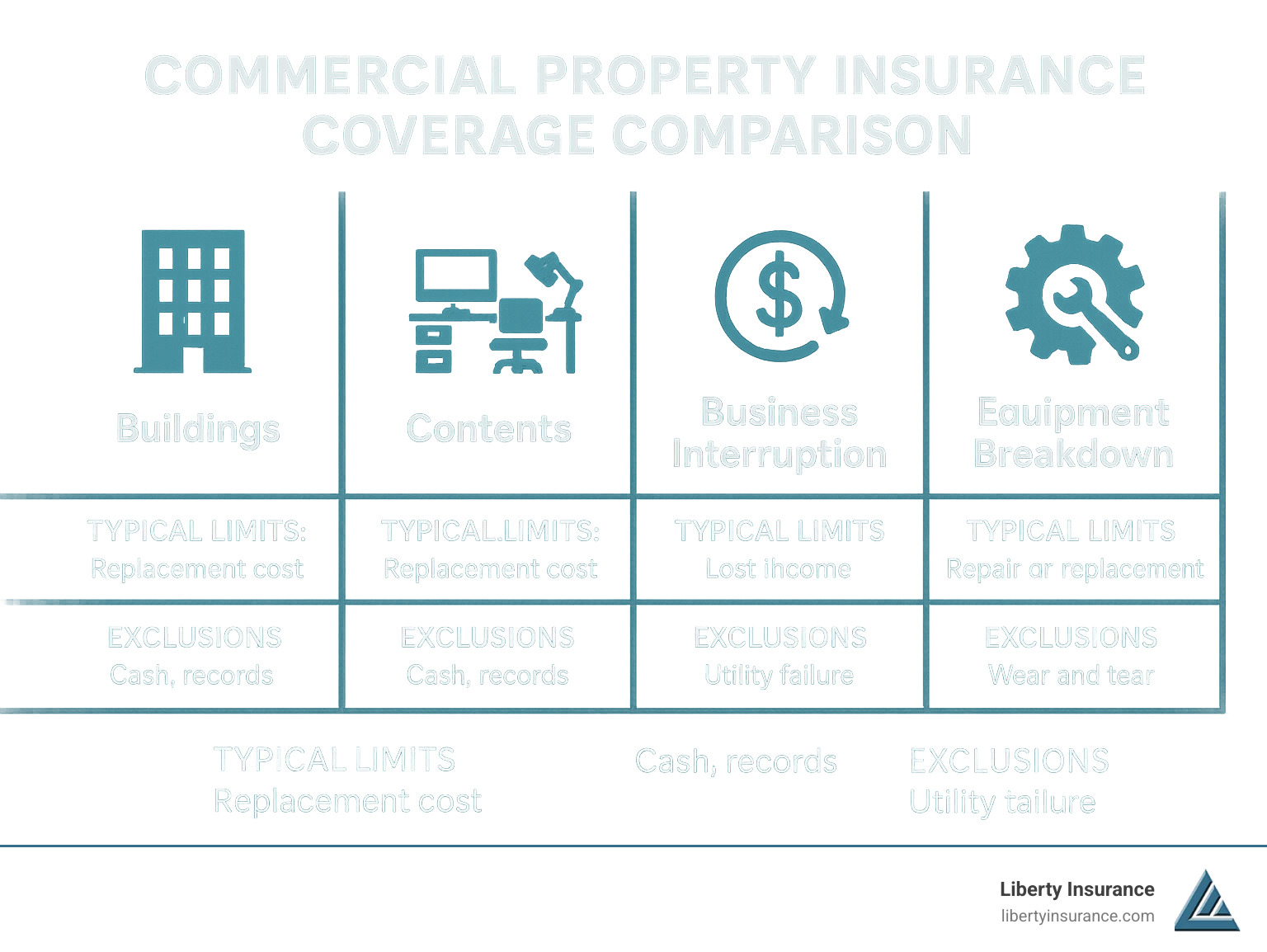
Protect your physical assets. This type of insurance covers the building where you do business and its contents, like computers, furniture, and inventory. Imagine a fire or storm damaging your property—Commercial Property Insurance ensures you’re not financially wiped out.
Workers’ Compensation Insurance
Your employees are your most valuable asset. Workers’ Compensation Insurance covers medical expenses and lost wages if an employee gets injured at work. It’s typically required by law, but more importantly, it shows your team that you care.
Comparative Benefits of Insurance Types
Here’s a quick comparison to help you decide which insurance fits your needs:
| Insurance Type | Coverage Benefit |
|---|---|
| General Liability | Protects against legal claims due to accidents and negligence. |
| Commercial Property | Safeguards business property from damage or loss. |
| Workers’ Compensation | Covers employee injuries and associated medical costs. |
Pro Tip: Bundle your insurance types to save on premiums!
Commercial Insurance for Small Businesses
Did you know that 40% of small businesses have never been insured? That’s a huge risk!
Commercial insurance acts as the safety net for your small business. It’s not just about protecting assets—it’s about ensuring the longevity of your dream project.
Understanding Commercial Insurance
Commercial insurance encompasses a variety of policies designed to safeguard your business from potential risks and liabilities. These can range from property damage to legal claims. In essence, it protects not just your physical assets, but also your reputation and financial stability.
Advantages of Commercial Insurance
Why should you consider commercial insurance? For starters, it offers peace of mind by covering unexpected disruptions. Moreover, it can be the determining factor in business continuity when disasters strike.
- Protection against unforeseen events
- Legal compliance
- Enhanced credibility with clients and partners
Pro Tip: Always review your policy annually to ensure comprehensive coverage.
It’s easy to think you’re covered, but overlooking details can be costly.
Crucial Scenarios for Commercial Insurance
Imagine a scenario where a major client sues you for an alleged breach of contract. Without commercial insurance, this could spell the end of your business. Here is the deal: commercial insurance is crucial when you have employees, own property, or have significant client interactions.
Consider these:
- Natural disasters—such as floods or fires.
- Product liability—if your product causes harm or damage.
- Employee-related issues—workplace injuries or disputes.
Choosing the Right Insurance Provider
Did you know that 48% of small businesses are underinsured? This is a staggering statistic considering the risks involved. Here is the deal: choosing the right insurance provider can make or break your business when disaster strikes.
Finding the perfect insurance provider for your small business isn’t just about rates. It’s about reliability, coverage options, and the provider’s reputation. You need to evaluate each provider carefully to make sure you’re getting the best bang for your buck.
Steps to Select a Reliable Insurance Provider
Step #1, check the provider’s reputation. Use online reviews and ratings to gauge customer satisfaction. Step #2, compare coverage options. Not all policies are created equal, and you need to ensure yours covers your specific risks. Step #3, review their financial stability. You don’t want a provider that might not be able to pay out when you need it the most.
Key Factors When Evaluating Insurance Providers
When evaluating different insurance providers, look at their customer service. How quickly do they resolve claims? Are they available 24/7? Also, consider their policy customization. Can you tailor coverage to suit your business needs?
- Reputation and reviews
- Coverage and policy options
- Financial strength and stability
- Customer service and support
- Policy customization
Pro Tip: Always ask for a sample policy document to review before signing anything. This lets you see exactly what is and isn’t covered.
Checklist for Comparing Insurance Offers
Here’s a quick checklist to help you compare insurance offers effectively:
| Criteria | Provider A | Provider B | Provider C |
|---|---|---|---|
| Reputation | Excellent | Good | Fair |
| Coverage Options | Comprehensive | Standard | Basic |
| Financial Stability | Strong | Moderate | Weak |
| Customer Service | 24/7 Support | Business Hours | Limited |
Use this table to assess which provider aligns with your needs and offers the best overall value. Remember, a slightly higher premium can be worth it for better service and coverage.
Cost Factors in Small Business Insurance
Did you know that the cost of small business insurance can vary drastically based on a few key elements? If you’re not paying attention, you could be overspending by a massive margin. Let’s break down the essentials so you can keep your costs in check.
Several factors influence the cost of small business insurance. The size of your business, the industry you operate in, and even your location can have a significant impact on your premiums. But don’t worry, there’s a strategy to manage these costs effectively.
Elements That Influence Insurance Costs
First, the size of your business is a major player. Smaller businesses often pay less than larger ones because there’s less risk involved. The industry is another critical element. For instance, a construction company will typically have higher insurance costs than a tech startup due to the nature of the work involved.
But here is the deal: understanding these elements can empower you to negotiate better rates. For example, if you’re in a high-risk industry, you could implement safety measures to lower your insurance premiums.
How to Lower Insurance Costs Without Sacrificing Coverage
Yes, you can save money on your insurance without losing coverage. Start by reviewing your policies annually. Sometimes, businesses pay for coverage they don’t need. By cutting out unnecessary provisions, you can reduce costs significantly.
Pro Tip:
Bundle your insurance policies
. Many insurers offer discounts if you take out more than one type of insurance with them. And consider raising your deductible. A higher deductible means lower premiums, but make sure you can afford it if you need to make a claim.
The Impact of Business Size and Industry on Premiums
Your business’s size and the industry you belong to are major determinants of your insurance costs. For example, let’s take a look:
| Business Size | Potential Premiums |
|---|---|
| Small (1-10 employees) | Low to Medium |
| Medium (11-50 employees) | Medium to High |
| Large (51+ employees) | High |
Industries like tech and retail often face lower premiums compared to construction or health services. Why? It’s all about the perceived risk associated with your business activities.
Real-Life Case Studies and Insights

Did you know that 40% of small businesses never reopen after a disaster? That’s a shocking stat. But here’s the deal: the right insurance can be a game-changer.
Let’s dive into some real-life stories where small businesses not only survived but thrived because they had the proper insurance policies in place. These case studies offer valuable insights into the impact of insurance on business resilience and growth.
Case Study: The Bakery That Bounced Back
This small bakery faced a major setback when a fire destroyed its kitchen. Thanks to their comprehensive business interruption insurance, they were able to cover lost income while rebuilding. The owner shared,
“Our insurance policy was like a lifeline. We couldn’t have reopened without it.”
Key takeaway? Always consider adding business interruption coverage to your insurance package. It can keep you afloat during renovations or relocations.
Insights from a Tech Startup’s Insurance Journey
When a cyber-attack hit a promising tech startup, their cyber liability insurance covered the costs of data recovery and legal fees. The founder noted,
“Having cyber insurance was crucial. It saved us thousands of dollars and tons of stress.”
Pro Tip: If your business handles sensitive data, cyber liability insurance isn’t optional—it’s essential.
Lessons from a Retail Store’s Insurance Experience
After a severe storm damaged their storefront, this retail store owner learned the importance of property insurance. Thanks to a good policy, they repaired damages swiftly and reopened in record time.
“Our property insurance turned a potential closure into a brief hiccup.”
Lesson learned: Evaluate your property insurance coverage limits annually to ensure it matches the current value of your assets.
Conclusion
As you navigate the ever-changing landscape of small business ownership, having the right insurance is like having a trusted co-pilot by your side. It’s about making informed choices that protect your hard work and give you the freedom to focus on what you love most—growing your business. By understanding the essential types of insurance, and knowing how to choose the right provider, you’re not just covering your bases; you’re setting the stage for long-term success.
Frequently Asked Questions
What are the three main types of small business insurance?
The three main types are liability insurance, property insurance, and workers’ compensation insurance.
Why is commercial insurance important for small businesses?
Commercial insurance protects against unexpected financial losses, ensuring your business can recover and continue operating smoothly.
How does liability insurance benefit a small business?
Liability insurance protects your business from legal claims related to injuries, accidents, or negligence.
What factors should I consider when choosing an insurance provider?
Consider the provider’s reputation, coverage options, cost, and customer service quality.
How can small businesses lower their insurance costs without compromising coverage?
Businesses can lower costs by bundling policies, increasing deductibles, and implementing risk management practices.
Does the size of my business affect insurance premiums?
Yes, larger businesses typically have higher premiums due to increased risk exposure.
Are there industry-specific insurance needs for small businesses?
Yes, different industries have unique risks and may require specialized coverage.